Troubleshooting
Why your air filter element collapses at half its service life
Air filter element collapsing early? Wet media, installation stress, rapid cycling and overloading are the usual causes. Learn to diagnose from the old part.
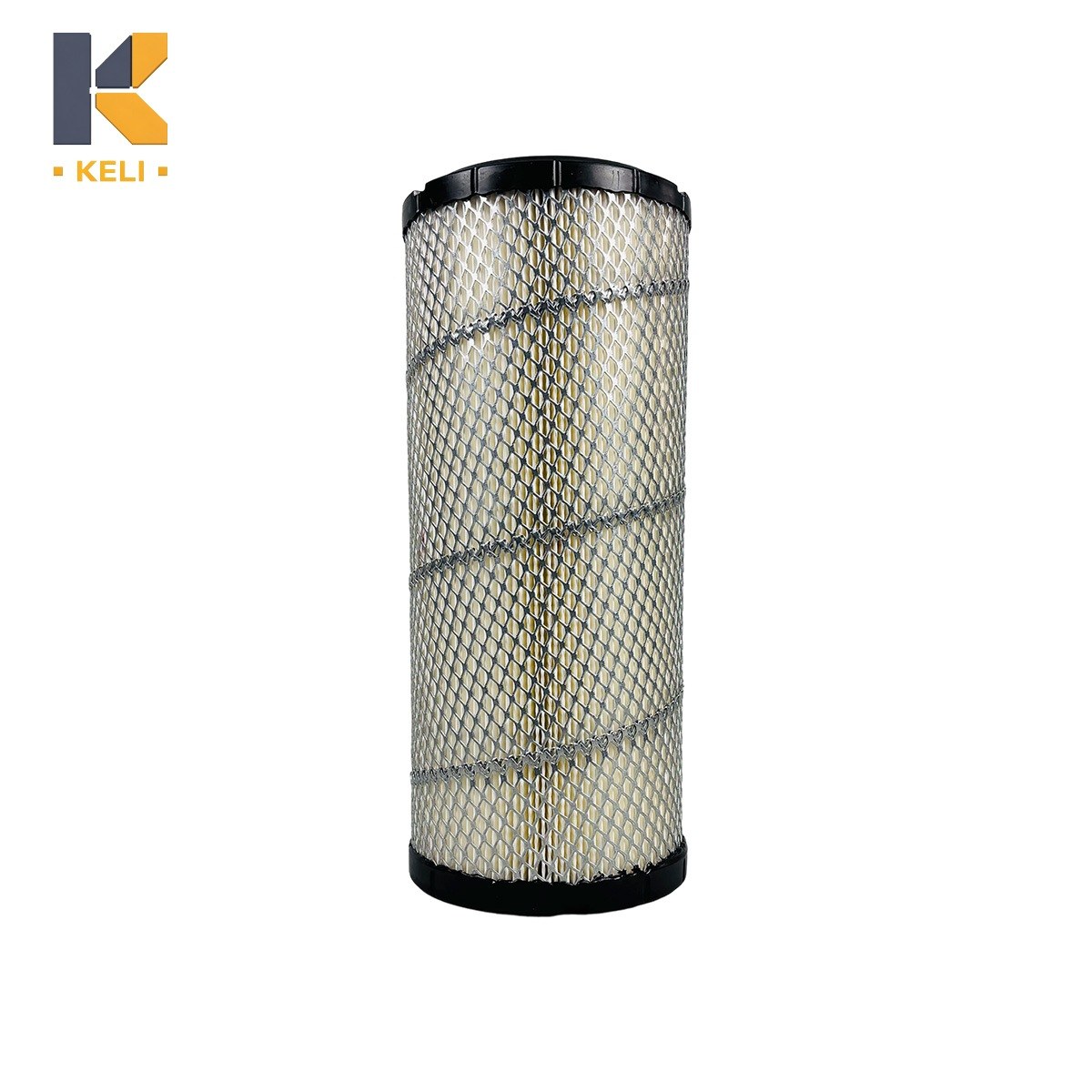
An air filter element that deforms or collapses halfway through its expected life is telling you something specific, and it is almost never simply a bad part. Wet intake air, installation stress, rapid cycling and dirt loading past the limit each leave a different signature on the removed element. Read those signs correctly and the fix is usually a change in practice, not just a change of brand.
What collapse actually means
Collapse covers a range of deformation: pleats folded flat, media creased or split, end caps tilted, or the whole element crushed inward. The danger is not the deformation itself but what follows — a split or unseated element lets unfiltered air straight into the compressor, so a collapsed element fails in the one direction that damages the machine. Treat any visible deformation as a filtration failure, not a cosmetic one.
Wet media loses its strength
Filter media relies on stiffness that comes partly from resin bonding, and water attacks it in two ways. Sustained humidity softens the structure until pleats slump under airflow load. Direct water is faster: rain drawn into an exposed intake, wash-down spray aimed at the machine, or condensation slugs from an intake placed near cooling towers, steam vents or open doors can deform an element within days.
The evidence survives on the removed part. Media that feels soft, shows tide marks, or dries with staining points to moisture as the primary cause, and the remedy is intake placement and shelter before it is a different filter.
Installation stress and uneven seating
Elements also fail from how they are put in. An element forced into a housing that is slightly out of round, a cover drawn down unevenly, or a center bolt over-tightened all impose loads the media was never designed to carry. The damage may not show on day one; it appears at the next changeout as pleats leaning to one side or an end cap that has cracked around the fixing.
The practical checks are simple: the element should drop into place without force, seat square against the gasket face, and the cover should close to the specified tightening without needing extra effort.
Dirt loading past the limit and abnormal pulsing
An element is engineered to hold a finite dust load. Pushed well past its design limit, the caked media flexes with every pressure swing and the pleat structure fatigues until it folds or splits. Rapid compressor cycling makes this worse, because each unload-reload cycle drives a pressure pulse through the intake. Where an installation has a self-cleaning or pre-clean arrangement, an abnormal backflush pulse can hammer the media the same way.
Both causes share one signature: the element dies mechanically while still looking evenly loaded, and the service history shows it ran well past its normal changeout point.
Reading the dead element
The removed element is a diagnostic record. Uniform gray loading across all pleats with a clean discharge side points to normal aging that simply ran too long. Dust streaks, or a clean band near the gasket, mark a bypass leak. Soft, stained media with slumped pleats indicates moisture. A single crushed sector with the rest intact suggests mechanical stress or impact. Pleats fatigued along the fold lines under heavy but even loading point to end-of-life overload.
Fixing the spec and the interval
Once the cause is known, correct it on both sides: spec and practice. Match the replacement to the machine and the actual environment — a dusty site needs a changeout interval driven by condition, not the calendar. Build the interval from observation: record the pressure drop when the element is new, track how it climbs on your site, and set the changeout point from the observed climb rate rather than from the printed interval alone.
Keli-Parts supplies intake filter elements matched to specific machine models across a range of more than 3,000 standard parts, produced at its own factory in Ningbo, and confirms the working conditions with you before quoting, so the element you receive corresponds to the environment it will run in.
Send the compressor model, a photo of the removed element and your site conditions to sales@keli-parts.com or WhatsApp +86 15757463901 — we confirm fitment first and reply with a quote within one working day.