Troubleshooting
Oil Carry-over in Compressed Air: Root Causes and How to Fix Them
Oil in your compressed air line usually points to the oil separator or the oil return circuit - not to the compressor oil itself. Here are the root causes to check, in order of likelihood.
Oil mist at the air outlets stains products, ruins paint and pneumatic tools, and signals that something inside the compressor unit is wrong. The most common causes sit in the oil separation circuit.
1. Damaged oil separator element
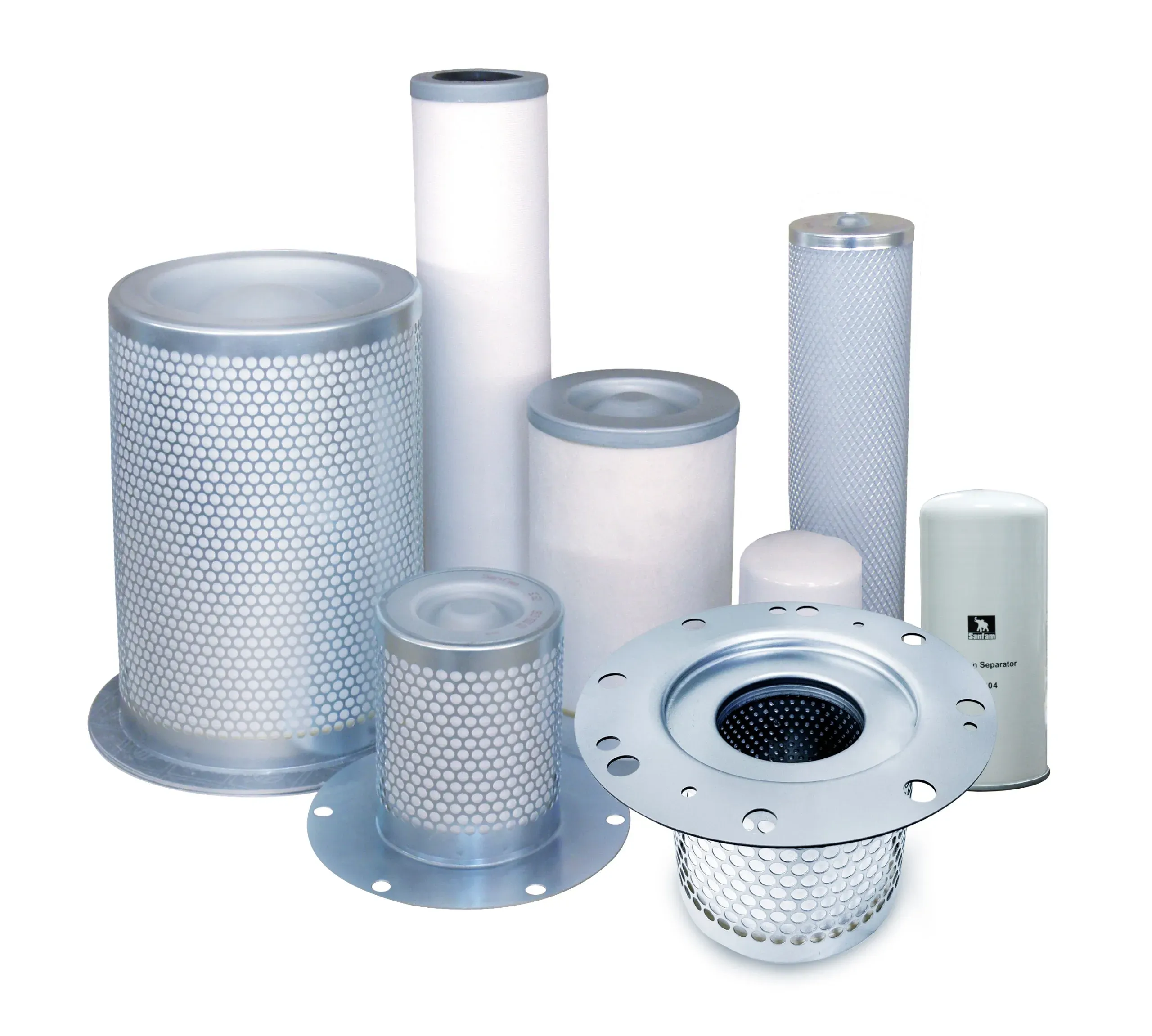
A broken or collapsed separator element lets oil pass straight through with the air. This is the most frequent cause. When replacing it, match the element dimensions exactly - on the 7.5-22 kW class a height difference of even 2 cm prevents correct seating.
2. Stuck oil return check valve
The separated oil returns to the sump through a small line and a check valve. If that valve jams, oil accumulates on the separator bottom and gets carried into the air stream. Clean or replace the check valve and the scavenge line strainer.
3. System pressure set too low
Running pressure below the design point increases air velocity through the separator and stirs oil into the flow. Keep the minimum pressure valve opening in its specified band - commonly 3.5-4.5 bar on the general screw compressor range - so separation stays stable.
What a healthy separator should deliver
For the GA30-75 class, a serviceable separator element works at oil carry-over of 3 ppm or less with a pressure differential of 0.2 bar or less. If your numbers drift above that after a fresh element, look at the return circuit and the operating pressure before blaming the part.
Buyer tip
When you request a quote for separator elements, state the compressor model, the required dimensions, and your current oil carry-over reading. Suppliers who ask for these details before quoting are the ones who will send you a part that fits.