Troubleshooting
Sizing a screw compressor: why matching air demand beats matching price
Sizing a screw compressor by kilowatts alone wastes energy or starves tools. Start from real air demand, working pressure and load factor instead.
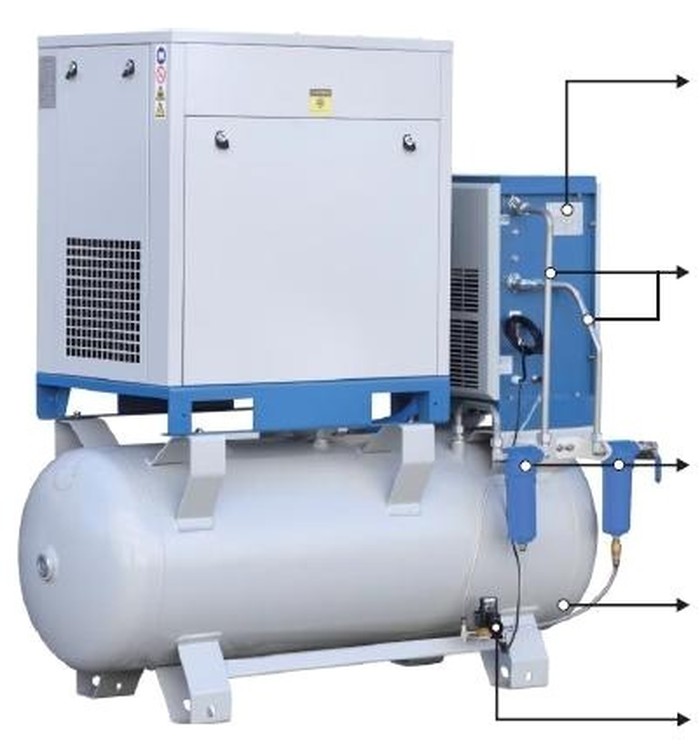
Replacing a failed compressor with a new machine of the same kilowatts feels safe, and it is how many purchasing decisions get made. The problem is that the old machine was sized for a plant that no longer exists. Demand has grown, equipment has changed and leaks have come and gone, so sizing a screw compressor correctly starts with air demand, not with the rating plate of the machine being replaced.
The power-for-power trap
A like-for-like kilowatt replacement copies every past sizing mistake forward. If the original machine was already oversized, the new one idles the same way. If production has added equipment since, the new machine may arrive undersized from day one despite matching the nameplate. The kilowatt rating describes the machine; it says nothing about what the plant actually consumes.
Start from measured air demand
The number that matters is actual air consumption, in m³/min or CFM, at the working pressure your equipment requires. The practical route is to list air-consuming equipment, note each one's consumption and required pressure, add a load factor for how hard and how often each actually runs, and correct for leaks — which in older networks can account for a substantial share of total consumption. A flow measurement at the header, where a meter can be installed, beats any estimate.
Two details sharpen the number. First, measure demand across a representative shift, not during planned maintenance downtime, when consumption is artificially low. Second, note the power supply available at the intended installation point — voltage and frequency — because it constrains which motors can be proposed without electrical work.
Pressure is part of the sizing, not an afterthought
Working pressure determines whether the machine fits the process at all. Some equipment needs more pressure than the rest, and one high-pressure consumer can drag the whole network's set point upward. Running the entire plant at elevated pressure to satisfy one machine raises energy consumption everywhere else; a booster for that single consumer is often the more economical answer.
Distribution losses belong in the calculation too. The compressor discharge pressure has to cover the pressure drop across the dryer, filters and piping before air reaches the point of use, otherwise the end consumer sees starvation even though the machine is running at its rated pressure.
Two ways to waste money on margin
Too much margin wastes money quietly. An oversized fixed-speed machine spends a large share of its hours unloaded or idling, consuming power while producing no air, and short-cycling on top of that. The electricity bill records the waste every month, but it arrives as a number, not as a diagnosis.
Too little margin wastes money loudly. An undersized machine drops network pressure when demand peaks, pneumatic equipment slows down, paint work suffers, and production blames the machine while the real issue is sizing. Margin sized to the measured demand profile, not to a round number, avoids both failure modes.
Match the control type to the load profile
Once demand and pressure are known, the machine type follows. A plant with steady, flat consumption runs well on a fixed-speed machine. A plant with sharp demand swings benefits from a PM VSD machine, which follows the load instead of loading and unloading against it. Where floor space and installation time are tight, an integrated unit with a built-in air tank and dryer reduces the layout to one connection point.
How Keli-Parts proposes a machine
Keli-Parts supplies KELI screw compressors from 7.5 to 132 kW in three series: fixed speed, PM VSD, and integrated units with a built-in air tank and dryer. We propose a machine from your air demand, working pressure and power supply configuration rather than from a price list, and we will tell you if a smaller machine with the right control type fits your profile.
Every unit ships with Keli-made oil separator, air filter, oil filter and service kit already installed, and each order carries a 12-month warranty. Because the consumables are our own product line, the parts supply for years of service comes from the same source as the machine, with fitment checked before every quote and replies usually within one working day.
Send your air demand, working pressure and power supply details to sales@keli-parts.com or WhatsApp +86 15757463901 — we will propose a matching machine and quote within one working day.